Cambodian Street Food Guide: What to Eat in Siem Reap
Street Food and Local Connections
Siem Reap may be best known as the gateway to Angkor Wat, but away from the temples you’ll find a thriving local food scene. Markets, roadside grills and small family-run eateries serve Cambodian street food throughout the day, often for just a few dollars.
For visitors, the difficult part isn’t finding food. It’s knowing what to order and where to try it.
This guide introduces some of the Cambodian dishes and street food you’ll encounter around Siem Reap, from charcoal-grilled meats and fresh spring rolls to noodles, local snacks and traditional Khmer meals.
What is Cambodian street food like?
Cambodian street food is generally simple, freshly prepared and strongly influenced by the ingredients available locally. Rice, noodles, fresh herbs, vegetables, grilled meat and fish feature heavily.
You’ll find vendors cooking over charcoal grills, preparing noodles to order or selling snacks from small stalls at local markets.
Cambodian food is sometimes overshadowed internationally by the cuisines of neighbouring Thailand and Vietnam, but it has its own flavours and traditions. Khmer cooking frequently uses fresh herbs, lemongrass, garlic, lime, fermented ingredients and dipping sauces.
And despite a common assumption about Southeast Asian food, Cambodian food doesn’t have to be extremely spicy. Chilli is often served separately or added according to taste.
Cambodian BBQ
One of the easiest introductions to street food in Siem Reap is Cambodian BBQ.
Walk through a local market in the late afternoon or evening and you’ll often see smoke rising from charcoal grills. Vendors cook everything from chicken and pork to fish and more unusual local specialities.
The food is typically served simply, accompanied by fresh vegetables, herbs and dipping sauces.
Cambodian BBQ frog
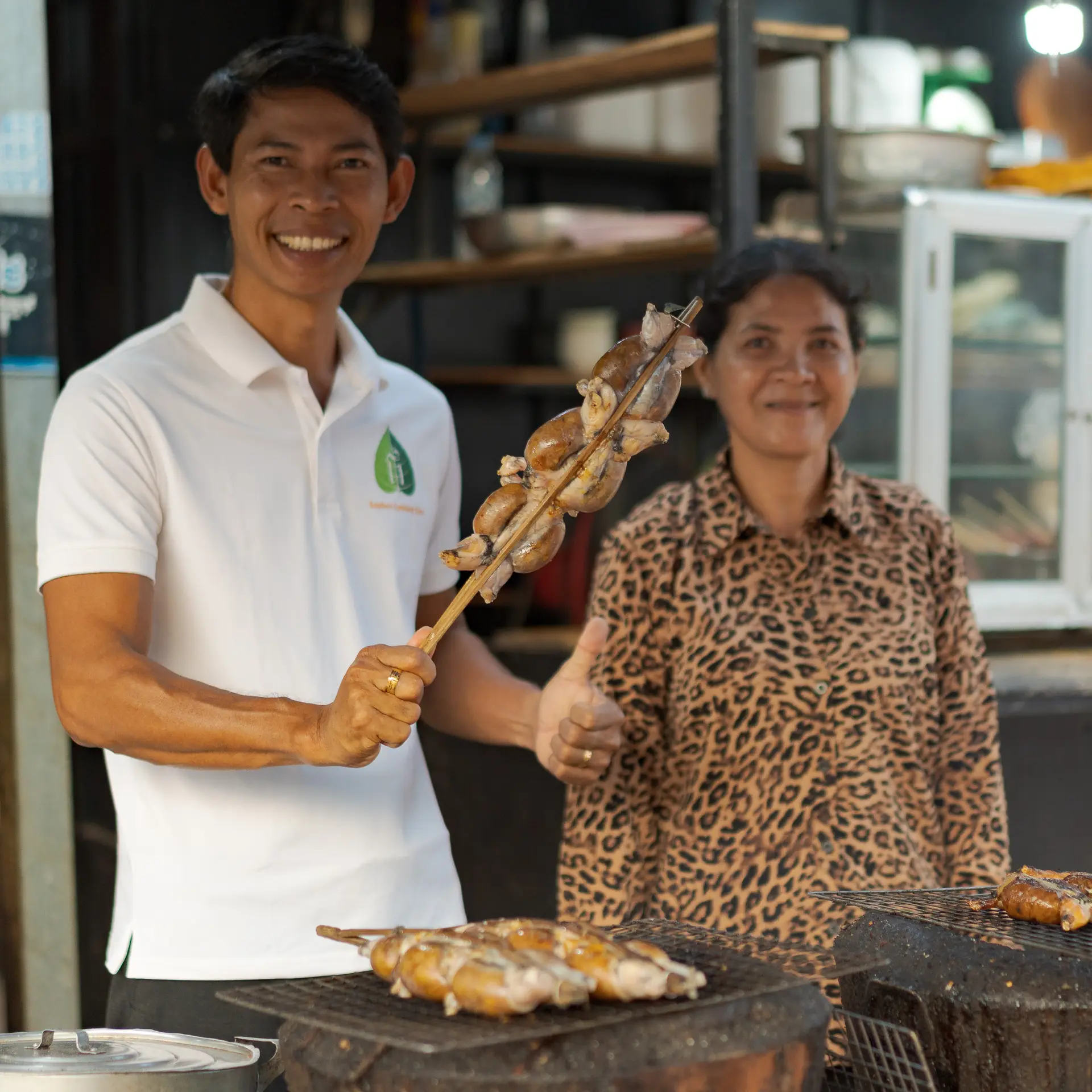
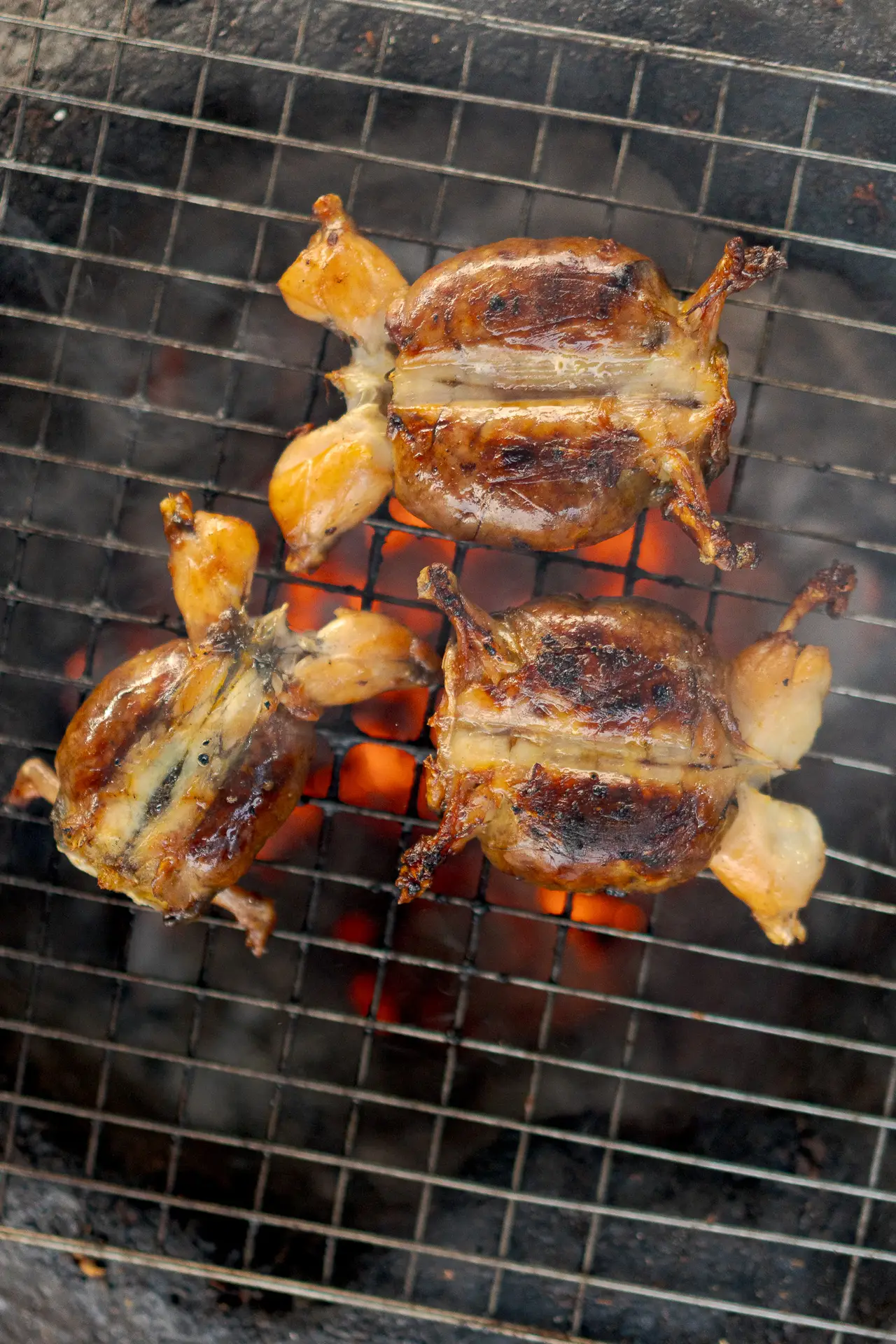
For more adventurous visitors, grilled frog is one of the Cambodian street foods worth trying.
Whole frogs are seasoned and cooked over charcoal until the outside becomes crisp while the meat remains tender. Depending on the vendor, they may be stuffed or heavily seasoned with local herbs and spices.
It might look intimidating if you’ve never eaten frog before, but the flavour itself is relatively mild.
Fresh Cambodian spring rolls
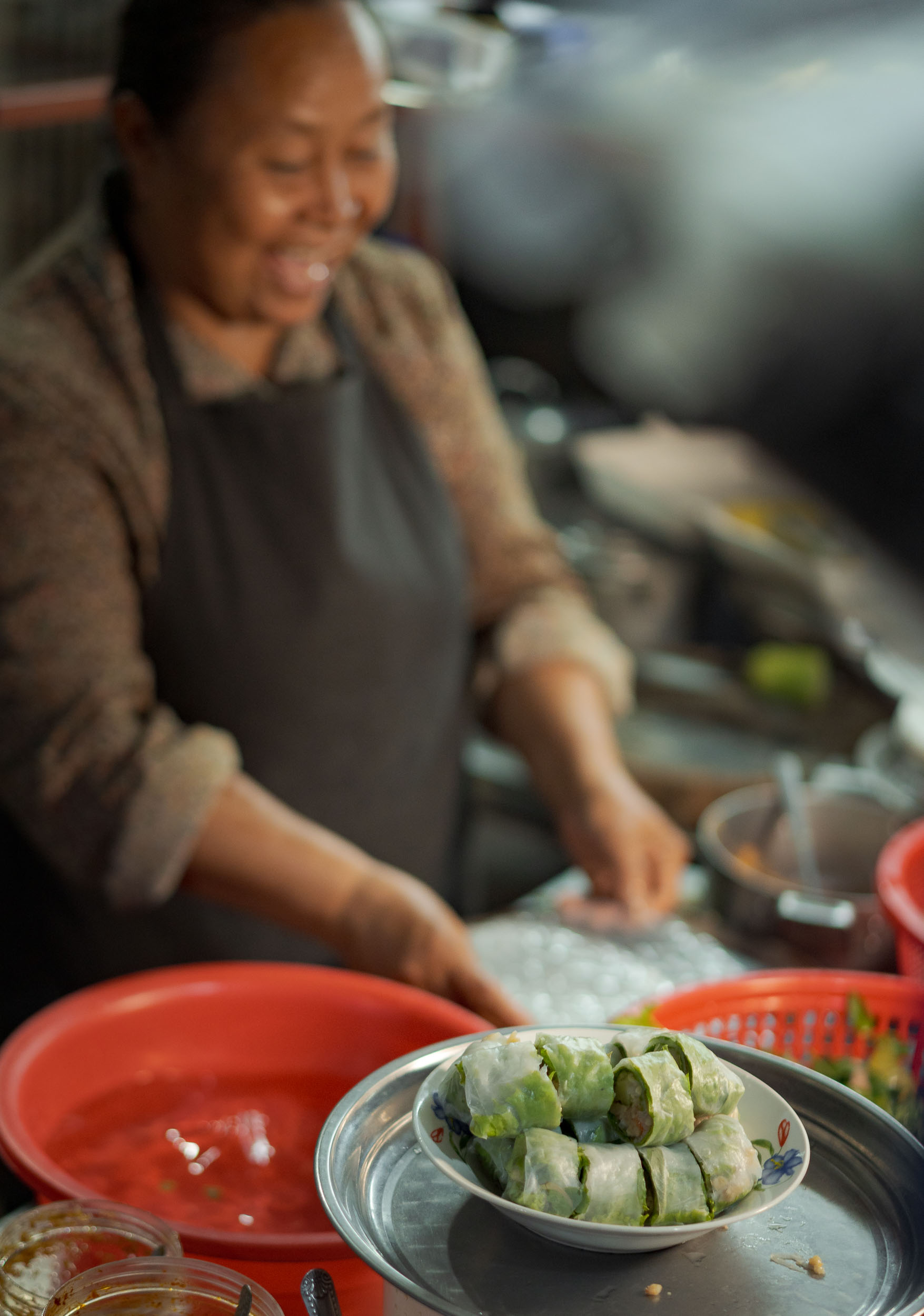
Fresh spring rolls are a lighter alternative to the grilled foods you’ll find around Siem Reap.
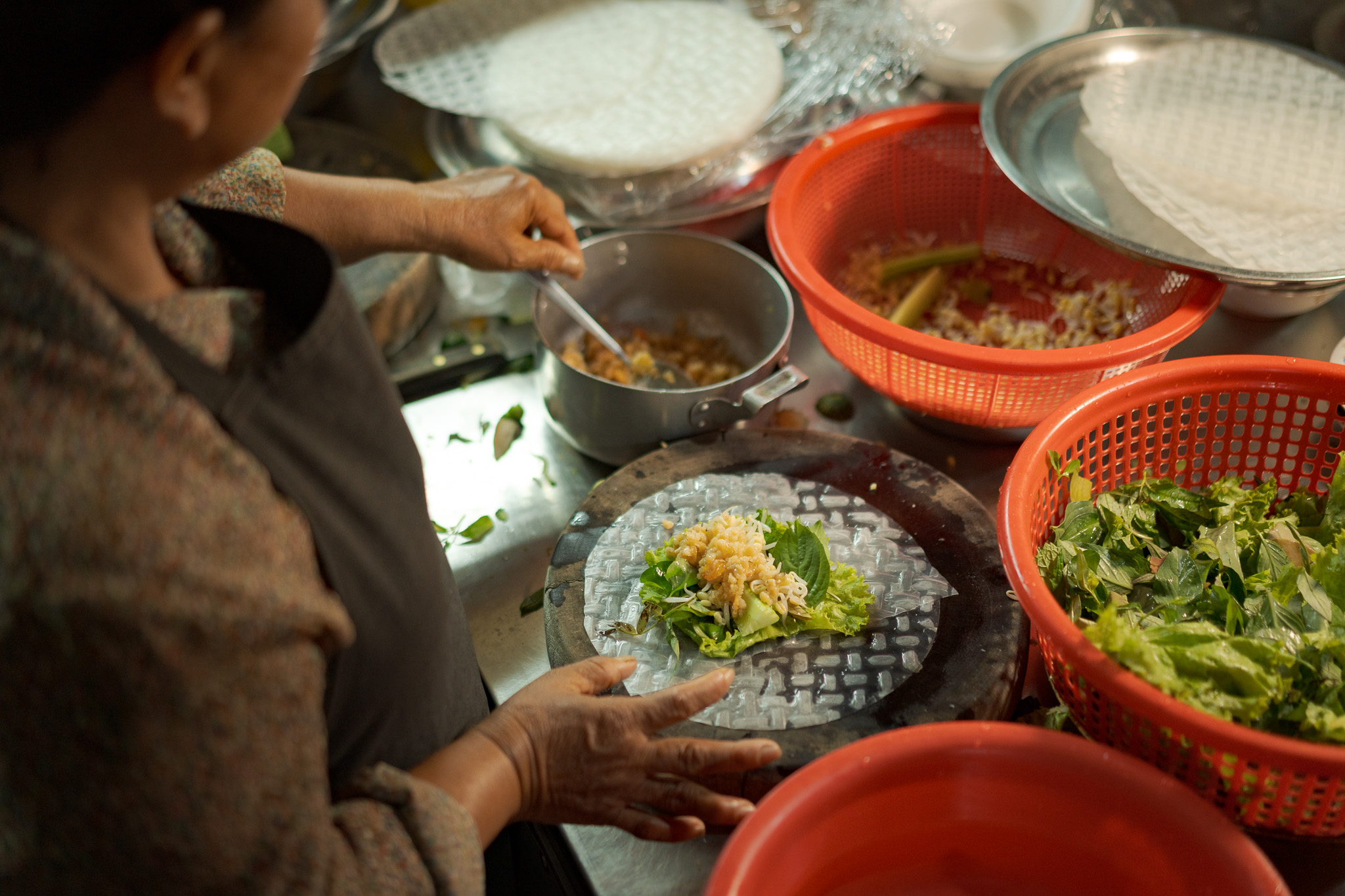
Thin rice-paper wrappers are filled by hand with combinations of vegetables, herbs, noodles and other ingredients before being rolled and served with dipping sauce.
Watching them being prepared is part of the experience. At local stalls, each roll is often assembled individually in front of you using ingredients prepared that day.
Fried insects and local market snacks
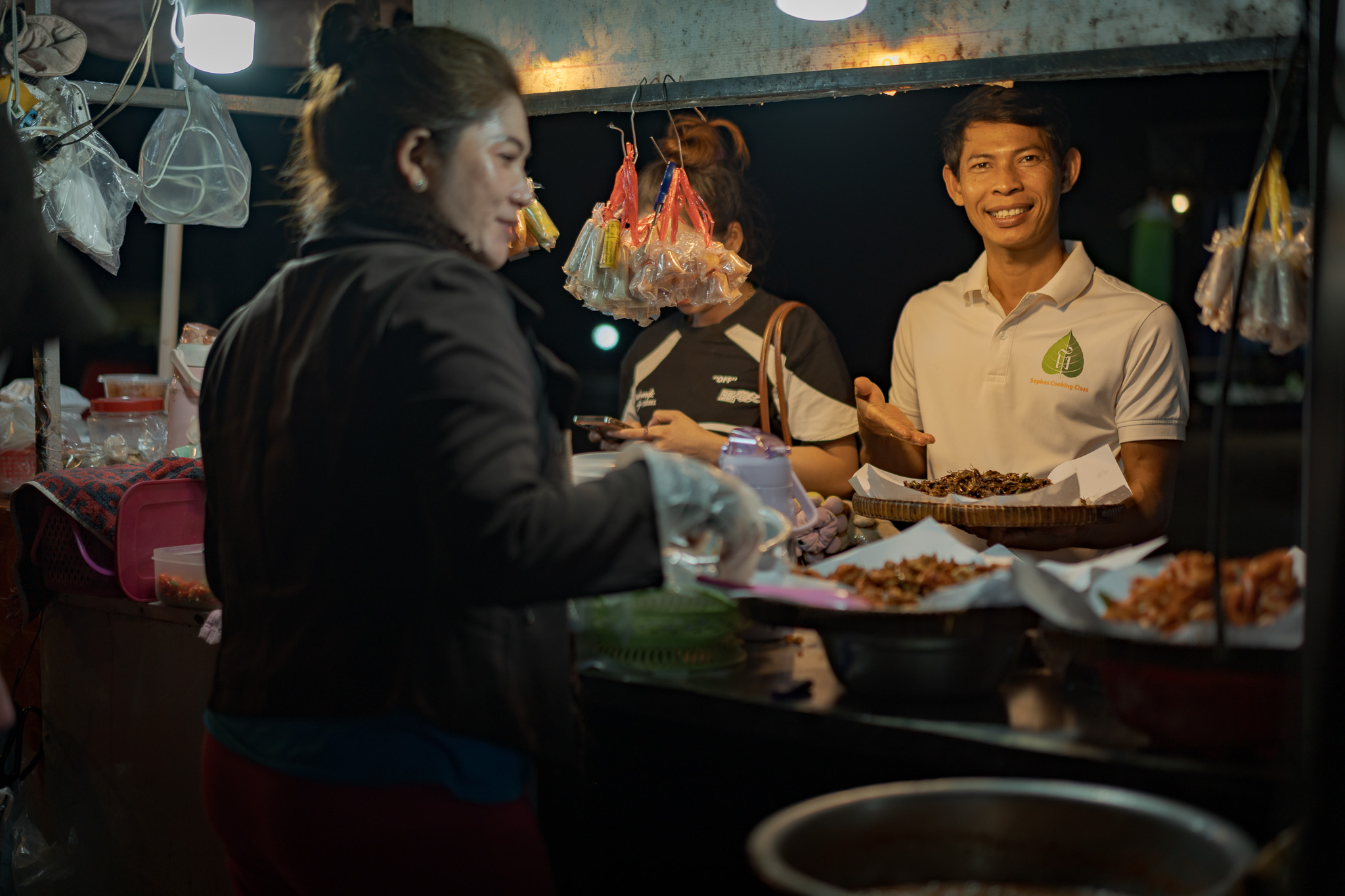
Visit a Cambodian market and you’ll probably encounter foods you weren’t expecting.
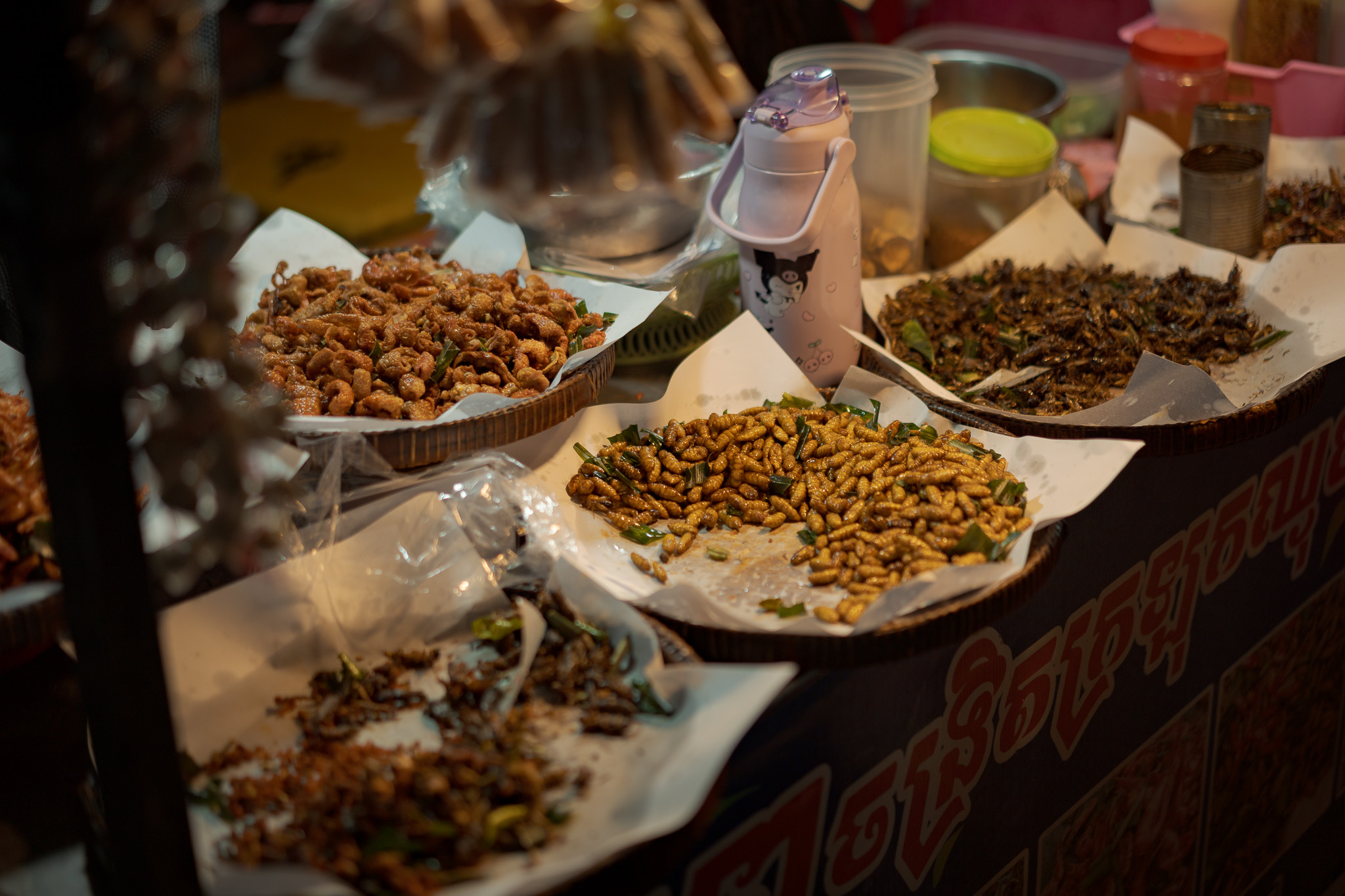
Crickets, grasshoppers and other fried insects can still be found alongside more familiar snacks. For visitors, they’re often regarded as unusual, but eating insects has a much longer history in Cambodia.
They’re generally seasoned and fried until crispy, making them closer to a crunchy snack than the experience many first-time visitors imagine.
Trying them is completely optional, of course.
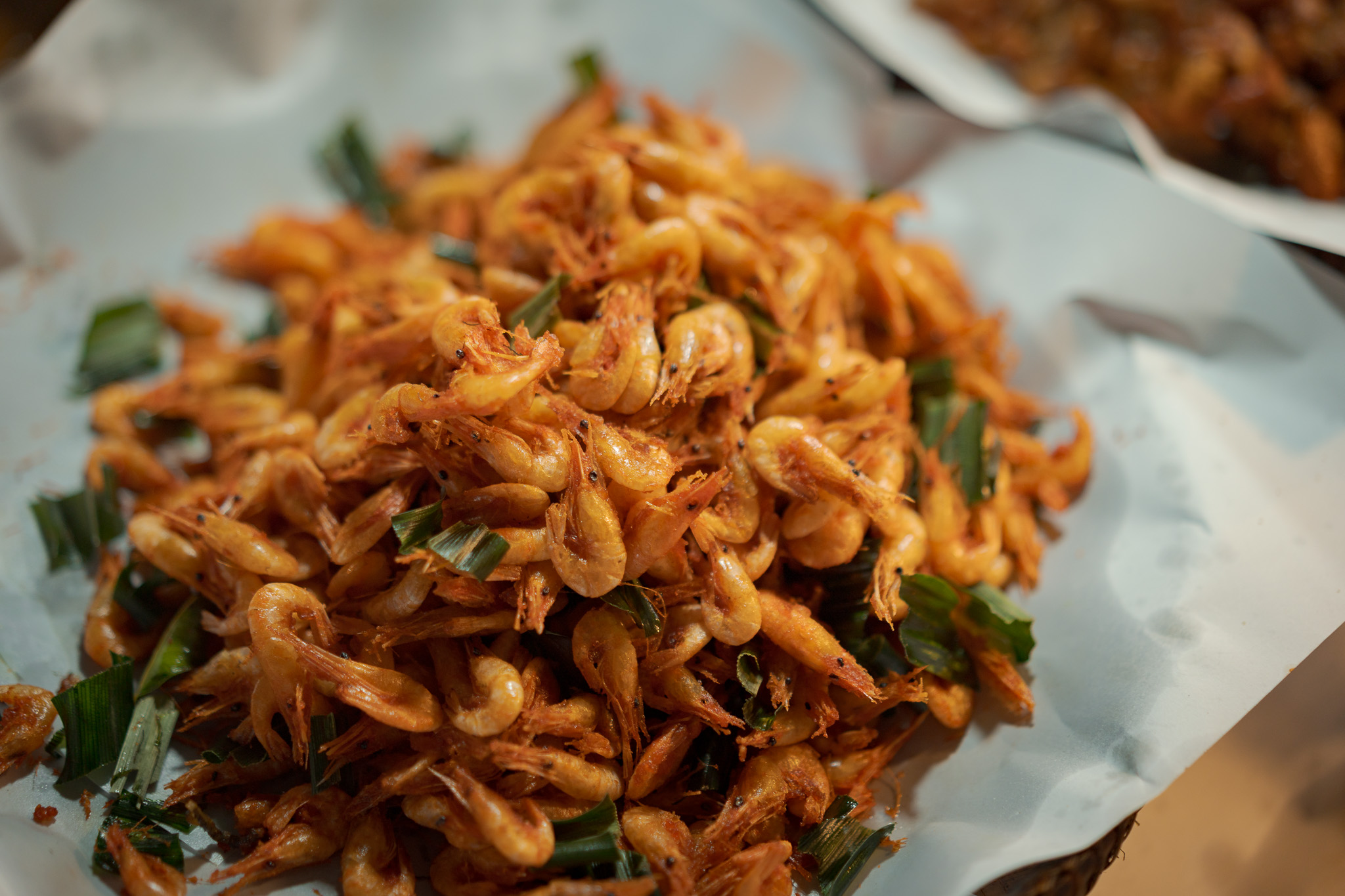
Local markets also sell plenty of less adventurous snacks, including crispy small shrimp, grilled foods, fruit, desserts and freshly prepared dishes.
Khmer noodles
Noodles are an important part of everyday Cambodian food.
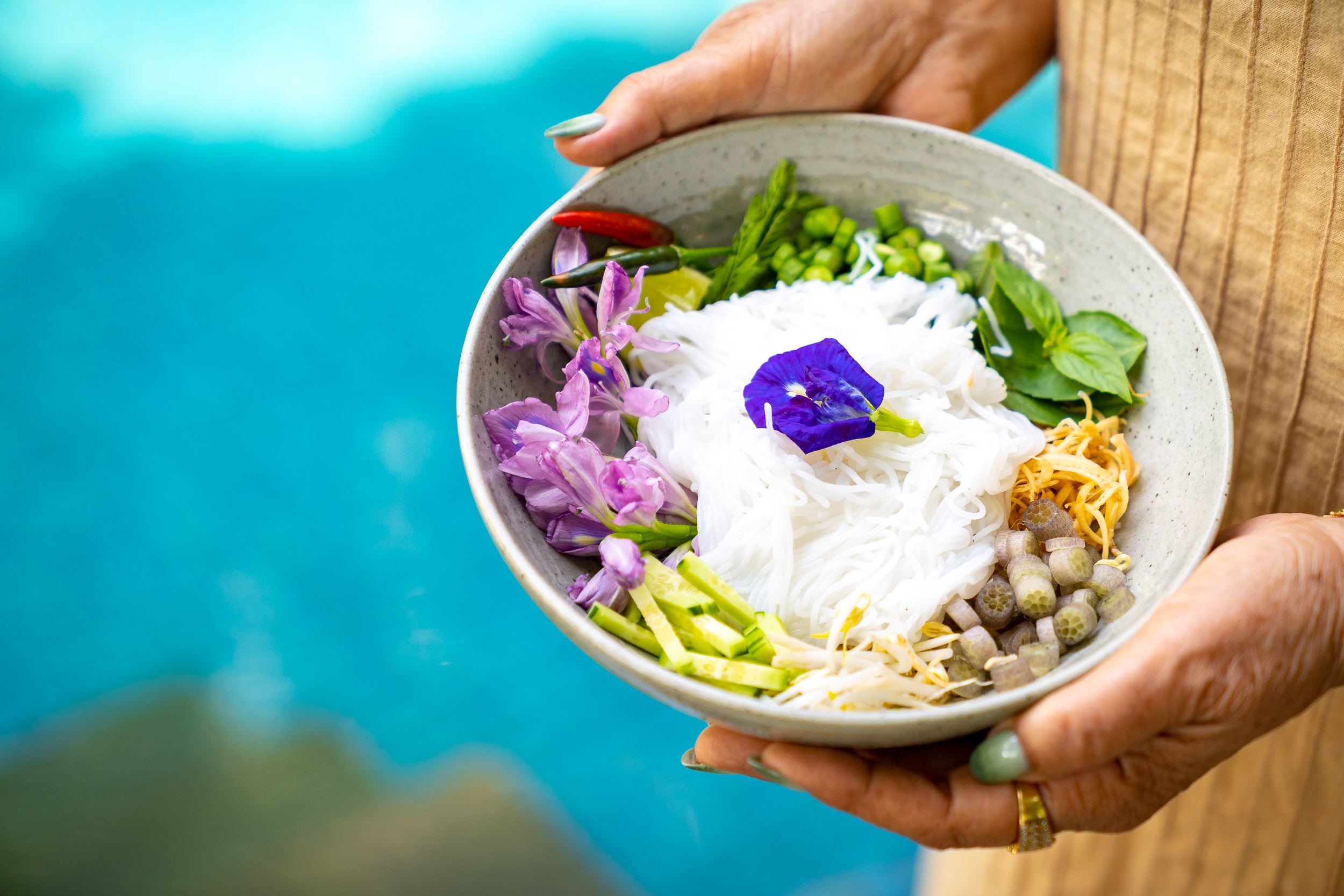
One of the country’s best-known dishes is num banh chok, often referred to in English as Khmer noodles. Thin rice noodles are traditionally served with a fragrant fish-based curry gravy and fresh vegetables and herbs.
It’s particularly associated with breakfast, although you’ll encounter noodle dishes at other times of day as well.
For visitors who want to experience everyday Cambodian food rather than restaurant dishes created specifically for tourists, noodles are an excellent place to start.
Traditional Khmer dishes
Street food is only one part of Cambodian cuisine.
A traditional Khmer meal usually involves several dishes shared together, rather than everyone ordering an individual main course. Rice is accompanied by combinations of meat, fish, vegetables, soups, herbs and dipping sauces.
Some of Cambodia’s best-known dishes include fish amok, Khmer curry, lok lak and various soups and grilled meats, although food varies considerably between families and regions.
Eating several dishes together is one of the best ways to understand how different Cambodian flavours complement each other.
Cambodian desserts and sweet snacks
Cambodian markets aren’t only about savoury food.
You’ll find colourful desserts and snacks made using ingredients such as coconut milk, sticky rice, banana, palm sugar and tropical fruits.
Some are served warm, others over ice, while many small cakes and sweets are prepared in advance and displayed at market stalls.
If you’ve spent the evening eating grilled meat and savoury dishes, something sweet makes a very good final stop.
Where to find street food in Siem Reap
Street food can be found throughout Siem Reap, but there’s an important difference between tourist-oriented night markets and markets primarily used by local residents.
The central tourist areas are convenient and worth exploring, but travelling a little farther from Pub Street and the Old Market reveals a very different food scene.
Local markets are particularly interesting in the late afternoon and evening, when vendors begin grilling food and people stop to buy dinner on their way home.
Small roadside stalls and family-run eateries can also serve excellent food despite having little or no online presence.
That’s one reason exploring with someone who lives locally can make such a difference.
Is street food in Siem Reap safe?
As anywhere in Southeast Asia, use some common sense when choosing street food.
Busy stalls are generally a positive sign because ingredients are being turned over regularly. Food cooked fresh in front of you, particularly food served straight from a hot grill or pan, is usually preferable to cooked food that has been sitting around for a long time.
Look at how ingredients are stored and how the vendor handles food.
If you’re uncertain about a particular stall, there are plenty of alternatives.
Is Cambodian street food spicy?
Not necessarily.
Some Cambodian dishes contain chilli, but Khmer food is not universally hot. Many dishes rely more heavily on herbs, aromatics, fermented flavours and dipping sauces.
If you’re sensitive to chilli, ask before ordering. Vendors can often leave chilli out or serve spicy sauces separately.
How much does street food cost in Siem Reap?
Street food is one of the most affordable ways to eat in Siem Reap.
Prices vary according to the dish and location, but individual snacks and simple local dishes generally cost considerably less than meals in restaurants aimed primarily at international visitors.
Markets also make it easy to try several different foods rather than committing to one large meal.
Bring some Cambodian riel or small US-dollar notes, as small local vendors may not accept cards.
The best way to experience Cambodian street food
You can certainly explore Siem Reap’s food independently, and wandering through a local market is an experience we recommend.
The challenge is knowing what you’re looking at, what to order and which stalls are worth trying.
That’s where exploring with a local can transform the experience. Instead of pointing at something and hoping for the best, you can learn what the dish is, what’s in it, how it’s prepared and why Cambodians eat it.
Our Siem Reap Street Food Tour is led by a local chef and takes guests beyond the usual tourist areas to discover Cambodian food where local people actually eat.
You’ll travel by tuk-tuk, visit local food vendors and markets, taste a range of Cambodian street foods and finish with a traditional Khmer meal.
Hotel pickup and return by tuk-tuk are included, so all you need to bring is an appetite.